If you are in an emergency, in crisis or need someone to talk to, there is help.

View Crisis Resources
Skip to content
  • Contact Us
  • No One Left Behind
  • Join our team
  • Referral Form
  • Virtual Urgent Care
  • Accessibility
CAMH logo
  • Patients and Families
    • Main Page
    • Access CAMH & Referral Form
      • Access CAMH

        Centralized information, intake and scheduling. Access CAMH makes it easy to find support – simply call 416-535-8501, option 2.

      • Referral Form

        For mental health services, a referral form needs to be completed by a healthcare provider. For addictions services, patient can self-refer.

    • Programs & Services
      • Addictions/Substance Use
      • Alzheimer’s & Dementia
      • Anxiety & Depression
      • Concurrent Disorders
      • Developmental Disabilities
      • Mood & Personality Disorders
      • Problem Gambling
      • Schizophrenia & Psychosis
      • Trauma & Stress Disorders
      • Virtual Mental Health and Outreach
      • Other
    • Information for Patients
      • Patient Wellness and Patient Engagement at CAMH
      • What to expect
      • Your Rights
      • Patient and Family Feedback
      • Visiting CAMH

        Planning on visiting CAMH? Find contact information, directions and accessibility for each of our three main sites.

    • Information for Families
      • Family Resource Centre
      • Patient and Family Feedback
      • Visiting CAMH

        Planning on visiting CAMH? Find contact information, directions and accessibility for each of our three main sites.

    • Patient and Family Feedback
    • Patient and Family Engagement
      • Patient and Family Partners Program
      • Information and resources
      • Get Involved in Research
      • Volunteer at CAMH
    • Visiting CAMH
      • Visiting CAMH

        Planning on visiting CAMH? Find contact information, directions and accessibility for each of our three main sites.

        Read More
  • Health Info
    • Main Page
    • Mental Illness & Addiction Overviews
      • Conditions and Disorders
      • Substance Use
      • Medication Therapies
      • Other Therapies
      • Information in Other Languages
    • Mental Health 101s
      • Mental Health 101

        Use this series of free online tutorials as the starting point to learn about and understand a wide range of mental health topics.

        Read More
    • Guides & Publications
      • Community Resource Sheets

        Community resource listings with information about related services offered outside of CAMH

        Read More
    • Crisis Resources
      • Crisis Resources

        If you are in an emergency, in crisis or need someone to talk to, there is a list of resources available for areas in and around Toronto.

        Read More
    • CAMH Store
      • CAMH Store

        The CAMH Store offers a wide array of mental illness and addiction resources for patients, families, students and professionals. Search or browse our catalogue of brochures and booklets, textbooks, manuals and assessment tools.

        Read More
    • CAMH Library
      • CAMH Library

        Open to professionals and the general public, our comprehensive resources and services support and enhance CAMH's research and clinical programs, and they facilitate learning, dynamic knowledge exchange and health promotion initiatives.

        Read More
    • Workplace Mental Health Playbook
    • Mental Health and the COVID-19 Pandemic
      • Coping with stress & anxiety
      • Quarantine & isolation
      • Stigma and prejudice
      • Loss, grief and healing
      • Covid-19 Resources for Health Care Workers
  • Research
    • Main Page
    • Research to Drive Change
    • The Discovery Fund
      • The Discovery Fund

        Fuelling the next generation of groundbreaking research and innovation dedicated to finding the causes of and cures for mental illness.

        Read More
    • Research Institutes
      • Research Institutes at CAMH

        CAMH Research adopts a thematic model that forms the basis of our four Research Institutes, within which our Research Centres are aligned.

        Read More
    • Clinical Divisions
      • Addictions Division
      • Adult Neurodevelopmental and Geriatric Psychiatry Division
      • Child and Youth Psychiatry Division
      • Forensic Psychiatry Division
      • General and Health Systems Psychiatry Division
      • Psychology Division
      • Schizophrenia Division
    • Find a Study
      • Participate in Research - FAQs

        Answers to frequent questions about joining a CAMH study, including how to sign up, what's involved, and how we protect your rights and confidentiality.

    • Koerner Centre for Research Training
      • Koerner Centre for Research Training

        Each year CAMH provides opportunities to the next generation of scientists: today’s undergraduate students, graduate students and postdoctoral researchers. Train in a unique learning environment and help contribute to the breakthrough mental health research and treatments of tomorrow

        Read More
    • Research Services and Initiatives
      • Brain Health Databank
      • Clinical Trials Unit
      • Digital Innovation Hub
      • Ethical Use of Animals in Research
      • Industry Partnerships and Technology Transfer Office
      • North Star Initiative
      • Research Engagement at CAMH
      • Research Ethics
    • Science & Research Staff Directory
      • Our Scientific Staff
      • Research Chairs at CAMH
    • Subscribe to Brain Buzz
  • Education
    • Main Page
    • Professional Development Courses
    • Courses for Patients, Families & Friends
    • CAMH Global Learning Academy
      • Find the Course That's Right for You

        Browse our entire selection of certificate programs, webinars and workshops.

      • Find the Workshop That’s Right for Your Organization

        View our full list of Workplace Workshops, Programs, and Consulting Services

    • TIDES
    • Student Centre Home
      • Mandatory Requirements and Training
    • Simulation Centre
      • Simulation Centre
      • SIMposium of Minds
    • Research in Education
      • Academic & Education Research Excellence
      • Health Equity and Inclusion Framework for Education and Training
    • Evaluation
    • Collaborative Learning College
    • Workplace Mental Health Workshops and Consulting Services
  • Professionals
    • Main Page
    • Treating Conditions & Disorders
      • Adult ADHD
      • Alcohol Use
      • Anxiety Disorders
      • Bipolar Disorder
      • CD and Stimulant Use Disorder
      • Dementia
      • Depression
      • CARIBOU - Treating depression in youth
      • Suicide Risk
      • Fundamentals of Addiction
      • Intellectual & Developmental Disabilities
      • OCD
      • Opioid use and opioid use disorder
      • Perinatal Mood & Anxiety Disorders
      • Personality Disorders
      • Psychosis
      • NAVIGATE - Treating Psychosis in Youth
      • Posttraumatic Stress Disorder
      • Sleep Disorders
      • Smoking Cessation
    • Projects
      • Climate Change and Mental Health
      • CA-CBT for Black Populations
      • Health Care Access Research and Developmental Disabilities
      • IRMHP
      • Cognitive Adaptation Training
      • Opioid Use in Primary Care Conference 2024
    • Networks
      • Psychiatry Partnerships with Northern Communities
    • Clinical Tools
    • Videos
    • Podcasts
      • Quick Takes

        A podcast for physicians, by physicians. Get your clinical education on-the-go.

    • Covid-19 Resources for Health Care Workers
  • Get Involved
    • Main Page
    • Ways to Donate
      • Make a One-Time Gift
      • Give Monthly
      • In Memory Giving
      • Fundraise Your Way
      • In Honour or Celebration Giving
      • Leave a Gift in Your Will
      • Gifts of Securities
      • See all Ways to Donate
    • Join the Cause
      • Corporate Partnerships
      • Business Leaders for Mental Health
      • CAMH Engage
      • womenmind
      • Visionary Society
      • Michael Wilson Society
      • Volunteer at CAMH
    • Making a Real Impact
      • Making a Real Impact

        Thank you for helping CAMH move faster, reach further and do more.

        Read More
    • The Role of the Foundation
  • Driving Change
    • Main Page
    • About CAMH
      • Leadership Team Directory
      • Performance & Accountability
      • The Role of CAMH Foundation
      • For Our Neighbours
      • For Reporters
      • Events Calendar
      • Contact CAMH
      • Careers at CAMH

        By working at CAMH, you can help people affected by mental illness and support their recovery. Join the team. Everyone who works at CAMH becomes an advocate for mental health.

    • The Crisis is Real
      • The Crisis is Real

        We are in the grips of a crisis that ruins health, threatens lives and hurts economies. Knowing the facts is the first step in creating hope.

      • Mental Health Statistics

        The latest facts and statistics on mental illness and addiction, who's affected and their impact on Canadians.

    • Addressing Stigma
      • Addressing Stigma

        Challenging the stigma associated with mental illness takes understanding, education and a closer look at our own attitudes toward health.

        Read More
    • The Mental Health Facility of the Future
      • The Mental Health Facility of the Future

        Turning what was once a walled institution into a symbol of hope for the future of mental health care.

      • Vision & Guiding Principles

        How do you replace an institution with an urban village? Lots of planning, imagination and a long-term commitment to serving patients, staff and the community.

      • History of Queen Street Site

        Our history—evolving from an asylum into a modern health facility with patients at the centre of care—is the history of mental health care in Canada.

    • Influencing Public Policy
      • Influencing Public Policy

        CAMH advocates for policies that are responsive to the needs of people with mental illness and addictions.

        Read More
    • Health Equity
      • Health Equity

        CAMH believes in the principle of equity. We respect the diversity of the individuals and communities we serve.

        Read More
    • Shkaabe Makwa
    • CAMH News & Stories
    • Strategic Plan
    • Contact Us
    • No One Left Behind
    • Join our team
    • Referral Form
    • Virtual Urgent Care
    • Accessibility
Guides & Publications
Do you know... Benzodiazepines

CAMH Logo
  • Benzodiazpines... Do you know
Back to top
  • Home
  • Health Info
  • Guides & Publications
  • Do you know... Benzodiazepines
CAMH logo
  • Guides & Publications List
  • Mental Illness & Addiction Overviews
  • Mental Health 101s
  • Treating Conditions & Disorders
Back to top

Generic and trade names: alprazolam (Xanax), clonazepam (Rivotril), diazepam (Valium), flurazepam (Dalmane), lorazepam (Ativan), temazepam (Restoril), triazolam (Halcion) and others

Street names: benzos, tranks, downers
  

What are they?

Benzodiazepines are a family of prescription drugs that are used mainly to relieve anxiety and to help people sleep. They are sedative drugs, which affect the activity in certain parts of your brain, resulting in a calming effect.

Other uses of benzodiazepines include:

  • inducing sedation for surgical and other medical procedures
  • treating alcohol withdrawal
  • controlling seizures
  • relaxing skeletal muscles, such as those of the back and neck.

Some people who abuse other drugs use benzodiazepines too, either to enhance the effect of other sedative drugs, such as opioids and alcohol, or to ease the agitation caused by drugs that have stimulant effects, such as ecstasy or cocaine. Taking benzodiazepines in combination with other drugs can be dangerous.

Because they are safer, benzodiazepines have replaced older drugs with similar effects, such as barbiturates.

Fourteen benzodiazepines are currently available in Canada, by prescription only.
  

Where do benzodiazepines come from?

All drugs in this family are chemical compounds that are made in the laboratories of pharmaceutical companies.
  

What do benzodiazepines look like?

Benzodiazepines are usually in the form of tablets or capsules, in various colours, which are taken orally. A few of them are also prepared as a solution for injection.
  

Who uses benzodiazepines?

In 2009, about nine per cent of Canadians reported using sedative or tranquilizer drugs such as benzodiazepines at least once in the past year. Of those who used these drugs, 1.7 per cent used them to get high.

A 2009 survey of Ontario students in grades 7 to 12 reported that 1.6 per cent had used sedatives or tranquilizers at least once in the past year.
  

How do benzodiazepines make you feel?

Benzodiazepines can relieve mild to moderate anxiety and make you feel relaxed and calm. They can also relieve insomnia and severe states of emotional distress.

A potential side-effect of benzodiazepines is that they may make you drowsy and/or clumsy. Taking benzodiazepines can also make it more difficult to learn and remember new information, and to perform some physical and mental tasks. Most often, learning, memory and performance return to normal once the effect of the drug has worn off.

Other side-effects that may occur include confusion, disorientation, amnesia, depression, dizziness and—extremely rarely—agitation and hallucinations.

The way benzodiazepines affect you depends on many factors, including:

  • what condition the medication was prescribed to treat, and the severity of the condition
  • the type of benzodiazepine you take
  • how much you take and how often you take it
  • how long you’ve been taking it
  • if you’ve taken any alcohol or other drugs (illegal, prescription, over-the-counter or herbal).
      
How long does the feeling last?

When benzodiazepines are taken by mouth, their effects may be felt within 30 to 40 minutes or within two to four hours, depending on the type taken. Most benzodiazepines have effects that are felt for several hours. The time it takes to eliminate these drugs from the body also varies depending on the type taken, and ranges from days to weeks.
  

Are benzodiazepines dangerous?

When used appropriately,  as prescribed by your physician, benzodiazepines are safe. However, there can be dangers associated with the use of these drugs:

  • Benzodiazepines can affect your ability to drive a vehicle or operate equipment safely, and can increase the risk of collision, especially if taken in combination with alcohol or certain other drugs.
  • When used to induce sleep, benzodiazepines may have some “hangover” effects, such as morning and daytime drowsiness, which may impair your ability to perform tasks requiring alertness.
  • Sensitivity to the effects of benzodiazepines increases with age. When older adults take these drugs, even as prescribed, they may become confused and have reduced muscle co-ordination, putting them at greater risk of falls, hip fractures and automobile accidents.
  • Taking benzodiazepines regularly for more than a few weeks can result in addiction.
  • Any regular use of benzodiazepines should be reduced gradually, with guidance from a physician or pharmacist, to minimize withdrawal symptoms.
  • Stopping high-dose regular use of benzodiazepines abruptly may cause severe withdrawal symptoms. Medical help may be required.
  • Dying from an overdose of benzodiazepines alone is rare. However, the risk increases when benzodiazepines are combined with other sedatives, such as alcohol or barbiturates, or with medications containing codeine or other opioid drugs. Combined use of benzodiazepines and methadone is particularly dangerous. Signs of possible overdose include slurred speech, confusion, severe drowsiness, weakness and staggering, slow heartbeat, breathing problems and unconsciousness.
  • The risk of birth defects from taking benzodiazepines while pregnant is not known, though it is thought to be very small. If benzodiazepines are used regularly close to delivery, the baby may be born drowsy or may have withdrawal symptoms such as restlessness and feeding problems.
  • Small amounts of benzodiazepines are passed from the mother to the baby through breast milk. This may cause drowsiness in the baby.
  • Certain benzodiazepines have been associated with sexual assault, or “date rape.”
      
Are benzodiazepines addictive?

When used as prescribed, on occasion or daily for a few weeks, benzodiazepines have a low risk of addiction. This risk increases, however, when benzodiazepines are taken regularly for more than a few weeks, especially when they are taken in higher-than-normal doses.

Signs of addiction include craving the effects of the drug, taking more of the drug than intended and continuing to use the drug despite the problems it may cause.

Addiction may develop with or without physical dependence. Signs of physical dependence include tolerance and withdrawal.

People are said to have developed tolerance to the effects of a drug when the same dose, taken over time, no longer has the desired effect. Some people who develop tolerance may take higher and higher doses to feel the same intensity of effect as when they started taking the drug. This use increases the risk of addiction.

People who use benzodiazepines for insomnia often develop tolerance to the sleep-inducing effects within a few weeks of regular use; however, tolerance does not usually develop with occasional use. Tolerance to the anxiety-relieving effects is less likely to develop. Tolerance to the effects of one type of benzodiazepine leads to tolerance to other benzodiazepines, and to other drugs with similar effects, including alcohol.

People who are physically dependent on benzodiazepines may experience withdrawal symptoms if they stop using the drug. The severity of withdrawal symptoms depends on the type of benzodiazepine used, the amount used, the length of time it is used, and whether the drug is stopped abruptly. Withdrawal symptoms can include headache, insomnia, tension, sweating, difficulty concentrating, tremor, sensory disturbances, stomach upset and loss of appetite. Severe withdrawal symptoms from regular use of benzodiazepines in high doses may include agitation, paranoia, delirium and seizures.

Long-term regular use of benzodiazepines should be reduced gradually, with medical supervision.
  

What are the long-term effects of taking benzo-diazepines?

When prescribed by a physician, taken at recommended doses on occasion or for a few weeks, and not taken with alcohol or certain other medications, benzodiazepines are safe medications. Long-term use of benzodiazepines, especially by older adults, may have lasting effects on the brain.


Excerpted from Do you know.... Benzodiazepines. 
You may also be interested in 

Vous connaissez… les benzodiazépine  

Download the PDF of Do You Know... Amphetamines  

Order a copy from the CAMH Store  

Treating Conditions & Disorders - information for primary care providers


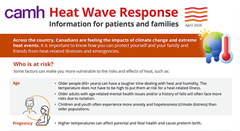
CAMH Heat Wave Response

CAMH Heat Wave Response 2026 short image

Check out the Climate Change and Mental Health Resource page with information in multiple languages for patients and families and for clinicians. 


Where can I find help, treatment and support? 
  • Crisis Resources: If you are in an emergency, in crisis or need someone to talk to, here is a list of resources available for areas in and around Toronto. 
  • To access treatment at CAMH: Access CAMH.
  • Key information for patients, families and visitors: Patient and Family Engagement. 
  • For information about supports available for families, visit Help for families from CAMH. 
  • Family members can contact the Family Resource Centre (FRC) to learn about family specific supports. 
  • Anyone can visit the RBC Patient and Family Learning Space (PFLS) to learn more about mental health and available supports. 
  • 988 Crisis Line - trauma-informed and culturally affirming support to anyone who is thinking of suicide, or who is worried about someone they know.  

Your gift can have twice the impact

This Mental Illness Awareness Week, every donation to CAMH will be doubled—extending your impact and helping more people and families find a clearer path to care.

Follow us
  • Patient and Family Care
  • Health Info
  • Science and Research
  • Education
  • Professionals
  • Get Involved
  • Driving Change
  • About CAMH
  • Job Openings
  • Purchase Publications
  • Referral Form
  • For Reporters
  • Donor Services
  • Events

CAMH Switchboard

From the GTA: 416 535-8501


Toll-free: 1 800 463-2338

To Access CAMH Clinical Services

416 535-8501, press 2

We have multiple locations. Find directions.

Map of CAMH's Queen Street Site
  • Staff Tools

Copyright 2026 CAMH

  • Terms of Use
  • Accessibility
  • Site Map

Keep in touch with CAMH

Keep your finger on our pulse – latest CAMH news, discoveries and ways to get involved delivered to your inbox.

Please select a newsletter

Please complete the following:

    Required Fields

    Please select a newsletter option

    Please input a first name

    Please input a last name

    Please input an email address

    By clicking Sign Up below, I consent to receive electronic communications (as selected above) from CAMH and CAMH Foundation. To unsubscribe at any time click the link in our mailing or email: unsubscribe@camh.ca

    Please agree to the Terms of Use


    Thanks for Subscribing.

    We look forward to keeping you informed, inspired and involved in all things CAMH.

    Help us change mental health care forever.

    Every donation moves us closer to a future where no one is left behind.

    $
    Other Ways to Give