February 2026
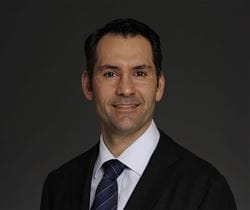
On this episode of Quick Takes, I spoke with Dr. Paul Kurdyak about how mental health care differs from other areas of the health system—especially when it comes to access, quality of care, and the need for a more structured and accountable approach.
Key takeaways from this episode:
- Our mental health care system lacks coherence and access
- There are pockets of excellence in mental health car
- Improving access requires structural change
- That a playbook to accomplish change already exists.
or download the PDF of the transcript.
February 2026
Episode 42: Building a better mental health care system
Running time: 30:27
[Musical intro]
David Gratzer: It's the paradox of modern psychiatry. Our tools have never been better — think about the new medications and psychotherapy that have transformed our field in these past decades. Yet at the same time, so many people lack access to care. And frankly, the care that they get is uneven in quality. What can be done? Can we build a mental health care system and what would that look like?
Welcome to Quick Takes. My name is Dr. David Gratzer. I'm a psychiatrist here at CAMH and today I'm speaking with Dr. Paul Kurdyak. He is, of course, a psychiatrist at CAMH. He also holds the position of Vice President, Clinical Mental Health and Addictions at Ontario Health. And of course, he is a professor at the University of Toronto. Welcome, Dr. Kurdyak.
Paul Kurdyak: Nice to be here, David.
David Gratzer: We're talking about mental health care and mental health care systems. Of course, all of us in the game feel passionately about this, but perhaps you feel a little bit more passionately than others?
Paul Kurdyak: I think what I have done that maybe differentiates me from others is I’ve done a bit of a deep dive into understanding the systems that explain the poor access. But certainly, when I was a resident doing call, the ways in which people with mental illnesses and substance use disorders struggle to find services that seem so different than the other areas of our health care system, always prodded me to sort of understand why that would be. And then, of course, you know, how many like decades later and, study after study understanding probably better than most people that we actually don't have a mental health system, which is the summary statement for why this is happening.
David Gratzer: You're our longest serving ED psychiatrist, as it would turn out. You've got years on the rest of us. And of course, by way of disclosure, you and I might have crossed paths when, say, you were a senior resident of psychiatry here, and I was a junior resident a couple of years ago. Um, what are some of the things that burn brightly in your imagination wearing your clinical hat? Things you've seen in the ED that that bother you?
Paul Kurdyak: First of all, like, I've always loved the work in the emergency department, and as a resident, I always like the acute stuff. I like the inpatient work. What I like about our emergency department is the fact that it is an open door in a sector that has a lot of cliffs and walls. And so that's what I love about it. What I don't like about the work is that it is so rare for something like the CAMH emergency department to exist. And for me to have the privilege of providing service to individuals who struggle legitimately with mental illnesses and substance use disorders, it's never just, uh, you know, “I need this kind of service because things are going on”. It's almost always accompanied by “I couldn't wait” or “I didn't know where to go.” And those two things have always bothered me because, I know there are facets of our health care system where that's simply not the case.
David Gratzer: Let's pick up on that latter point. I mean, often what we say is there's no mental health care system, but, you know, there's no health care system. But in fact, there are pockets of excellence one could point to with better organisation. And in some of your work is informed by that. What don't you tell us about that?
Paul Kurdyak: Oh, sure. I'll start with a personal story. And before I get into the personal story, I'm sure you have the same as the experience I have where, multiple times a week, there will be people who get in touch with me by email or text or phone and say, you know, I've got a family member, a friend, who needs some sort of psychiatric service. And then, I have to take the time to first of all, read the issue and then, twist elbows or, or call in favours. And while I don't mind doing that because I know, like everybody else, that the reason people are reaching out because they simply don't know where to go. So that's why I don't mind. I do have a bit of a preoccupation and concern that access is easier by virtue of knowing I exist, you know? That seems to be a bit of an equity issue. Uh, but I'd say the abiding feeling I have when this happens is shame. Like shame that people actually have to reach out to me and rely on me.
So, the counter narrative is in January of, 2020 my wife Pat, was diagnosed with colon cancer and we were really stressed out, obviously. And she got referred to the Odette Cancer Centre at Sunnybrook. And so, because of our heightened level of anxiety about the issues, I, I did what everybody does to me. I reached out to Andy Smith, who's the CEO of Sunnybrook, and he's a colorectal cancer surgeon by training. So, and he was very kind to me. He spent a half an hour, but I was struck at the end of the conversation that Andy really could have said two things: like, nobody can guarantee Pat's prognosis – like nobody can guarantee that, but I can guarantee that Pat will get precisely the care that she needs, when she needs it and that things will just work. Well, that's what happened. I mean, after she was diagnosed, and sort of was, you know, logged as a patient at the Odette Cancer Centre, we didn't have to do anything. Like she got summoned to do tests before her first appointment. Uh, you know those the results from the tests were sent routinely to the Odette Cancer Centre. Our appointment was a Tuesday. I learned after the fact that the Tuesday morning of our appointment, the three providers involved with her care the radiation oncologist, the hematological oncologist, and the surgeon all met to review Pat's personal data relative to the mountain of evidence generated by our cancer system. So it is personalised medicine in a way, but it's also personalised medicine anchored on a learning health system that generates real world evidence on what care should look like.
Paul Kurdyak: And then things got really weird. So, our appointment I remember was Tuesday at 10:25. Pat got her sort of little wristband, logged in, we went to Clinic A, there was a red digital sign above Clinic A that said: “We apologize. Clinic A is running two minutes behind”. We got called in at 10:27. So for me obviously totally stressful situation. But as a health system person, I was really curious about what explained our experience. And of course, being at Ontario Health, I am rubbing shoulders with the people who are working and who actually built this cancer system and know firsthand exactly what explains that. But also, throughout that experience, I thought about all the people who show up in the emerge who have the same anxiety as Pat had, which is, you know what Andy said: “nobody can guarantee the prognosis”. But they also had to really stress about whether they were going to be able to access care and if they were able to access care, whether it was going to be what they needed. And so, what a difference. What a difference, working and studying our sector and then having this real-world experience of this other area of our healthcare system that's so phenomenally different in terms of access, standardization and transparency and accountability and the ability to monitor performance for greater good.
David Gratzer: And one should skip to the end of the novel and point out that your wife's doing better, thank goodness.
Paul Kurdyak: Oh, yeah. She's good. Yeah. Thank you.
David Gratzer: Thank goodness.
Um, how do we get there? You point out it's such a different system. Two minutes late and they're apologizing. I mean, that's different from this centre. And frankly, any centre I'm aware of in mental health care in Ontario.
Paul Kurdyak: Yeah. Well, so that's a really interesting thing because, you know, in my provincial role at the Mental Health and Addictions Centre of Excellence, one of the things we've done is sort of a jurisdictional scan. Like, are there any shining examples of mental health systems that perform similarly to what we understand as good healthcare in Ontario? And the short answer is no. There are pockets of excellence. And you and I have talked a lot about the CBT learning health system that David Clark has developed. And that's an unbelievable system. But once you get outside of that system, your access to psychiatrists, et cetera, et cetera, it doesn't look so great within the NHS. So, before Ontario Health if you'd asked me, I would have said, well, how do we get there is just like measuring things. And I still believe that to be the case. Obviously, you need to measure issues related to access. You need to measure issues related to outcome. And you need to measure processes to understand the variation related to both. But that's not enough. You need structures and processes to ensure that there is accountability. What I mean by accountability is it's not enough to observe variation in performance through the measurement. You have to have levers and culture such that people are inspired to improve if they're, if on the short end of the variation stick.
David Gratzer: You mentioned cancer care with a personal example. Let's talk about depression care. I mean, people's experiences are going to hugely vary. Somebody might see their family doctor and get a prescription. Somebody might see their family doctor and do cognitive behavioural therapy with that family doctor or get a referral to a GP psychotherapist. Somebody might be referred to a hospital where they might get a one-off consultation, or they might get follow up care. I mean, how could these systems shift more like cancer care?
Paul Kurdyak: Yeah, it's a great question. and what I would say is that in our sector, if we talk about depression, it’s a lot of talk about "what", you know? What should pharmacotherapy look like? What types of psychotherapy should be available? Should we be integrating, you know, ketamine or psilocybin? When does rTMS come in? And for me, these are important questions. But if you don't address the "how" the "what" doesn't matter.
So, the short way of answering what depression care should look like is to take a big step back. I think there are two broad types of populations we serve in the mental health sector. One would be people with severe mental illnesses like schizophrenia. The kind and complexity of care that these individuals need far outstrips what we can expect primary care to manage. Right? And so, if you strip away the "what" we're actually talking about cancer care. So, for rare severe complex management populations we actually need to establish regional centres to manage that population. Uh and we need primary care just to identify and refer.
Depression to me is a little bit like hypertension or diabetes. In our health care system, there's an understanding that primary care is going to do first line care for diabetes. And most people are going to respond to that first line care. But if people don't respond to the first line care, they seem to be treatment refractory, those are the individuals for whom the specialists, like the endocrinologists, are better suited to help support primary care to manage. And so, like in depression care currently, half the people get nothing, some people get antidepressants prescribed to them in primary care, but it's not measurement based and it's usually not evidence based in the sense that it's usually not adequate dosage and duration. There's no measurement about whether people respond to the care they're given. We don't have a system to identify treatment refractory populations for whom people with our training are better suited to manage. So, to me, depression is a lot like diabetes in the sense that our clinical committee has kind of visualized a population-based integrated care pathway for depression care. So, the first line treatment is either CBT within our Ontario Structured Psychotherapy program and/or first line antidepressant treatment in primary care. But then we measure them, and if they don't respond to one or the other or both, then we have to figure out the services that that kick in with the subset of individuals with treatment refractoriness such that, you know, we get involved, rTMS gets on board, ECT.
So that's a long winded way of saying that in thinking through this integrated care pathway, we are thinking down the road when we get there: how can we support primary care to do the kind of quality of care for depression and anxiety related disorders that they routinely do, and are supported to do, for diabetes and hypertension?
David Gratzer: Let me push back a bit. I mean, what you're saying makes sense, but is it perhaps a bit of an unfair comparison? Cancer care. We intuitively know the difference, even us non oncologists, between a stage one carcinoma and a stage four carcinoma. In that there's so much work that's already been done on treatment pathways and evidence. And psychiatry is just a more grey field. I mean we talk about depression. Depression might mean that somebody can't get out of bed, and they won't respond to CBT. Depression might mean, as you've suggested, that they respond to their first antidepressant. Is it just tougher to do this sort of thing in mental health care?
Paul Kurdyak: I think it's going to be really challenging to do this. I think that there's been an unnecessary dialectic around measurement-based care and nuance, that I personally feel and personally do measurement based – even in the emergency department. I start somebody on an antidepressant in the emergency department and I administer a PHQ-9. But I also am very inquisitive about the impact of that depression on that individual and look for the nuance. But at the end of the day, I'm much more comfortable understanding whether that individual is getting what he or she needs on the basis of a zero response to PHQ-9, then the nuanced assessment, especially across different providers. So that's a really long-winded way of saying, yeah, I think it is going to be challenging because it's more of an amorphous setting. Care occurs in the community and hospital based, but I think our biggest hurdle is cultural. More so amongst providers than patients, to be honest. And our colleague Juveria Zaheer has done a really interesting study on perceptions of measurement-based care in CAMH's Slate Centre for Early Psychosis Intervention. And there was a significant sort of cultural discomfort amongst the providers around the use of measurement-based care. But the patients and family members didn't even understand the question. They're like, yeah, of course, of course we want our progress monitored. And they're kind of reassured. I know it's going to be challenging because the work we've already done, uh, I know no better way.
David Gratzer: Let's pick up on measurement-based care. I mean, I won't give comment on a first episode program because I haven't worked in one since residency. But certainly, I have patients with mood and anxiety, and I might see them in the emergency department or the inpatient units. I might see them in outpatient setting. I'm struck by how many of them have embraced measurement-based care. Now they don't call it that. What they might say is, “I got this app that does a mood tracker,” right. And they might also be seeing their family doctor or their psychiatrist. And they will come in and say, look, I've graphed this out over time. Certainly not every patient in every circumstance, but it's interesting that there's that gravitation towards these sorts of things by patients and family members. Dr. Zaheer in that study actually found family members liked, felt empowered, I think.
Paul Kurdyak: Yeah.
David Gratzer: [That] was their view or their perspective. But there's hesitancy amongst us docs and also amongst primary care, amongst psychologists. Why the hesitancy?
Paul Kurdyak: Yeah, that's a really good question. I honestly don't know. But if I had to guess, um, I do not believe we are supported to do this particularly well. Like, I personally find, like even if we think about CAMH, I find the integration of measurement-based care into our electronic health record kind of clunky. And it doesn't create sort of routine, sort of patient-level dashboards on sort of serial response over time. So, I don't think we're supported to do it adequately from a, from an infrastructure perspective. And I also believe that it's more nuanced than the PHQ-9. Right? Like the things, the things that we see, the things that we do, the things we engage in is more nuanced. And of course, it's more nuanced. Like, you know, an individual's experience of cancer is more nuanced on the size of the tumor, but you need some objective markers of response to treatment to figure out what to do next. Right?
David Gratzer: So, one doesn't exclude the other. Fair?
Paul Kurdyak: Yeah, it seems as though good holistic care and measurement-based care are artificially at odds. And that that is a cultural issue within our sector. But again, like I'm not an expert on this and other people would, would maybe have better ideas such as yourself.
David Gratzer: Well, let me let me then ask you this. We've talked about different sectors. We've talked about possibilities. What are a few things that you think would make a material difference tomorrow? So how do you think mental health services should shift now?
Paul Kurdyak: What I can tell you is our Ontario Structured Psychotherapy, I'm going to call it OSP for short, our OSP story. And I'll try and be brief.
When we took, “we” meaning the Centre of Excellence, took over OSP, it was overseen and funded like every mental health service in our province. Which is the ministry selected four providers, gave them a chunk of funding and said you should deliver CBT — with very little guidance as to how they should structure the program. Very little on broad categories like this is your age range, who's in, who's out. The one thing that was good about the program was the training that was developed by Marty [Martin] Anthony, who was the original clinical lead, and the oversight of the therapists who were hired to deliver the therapy. So, when we got it, we were pretty certain that the care was of high quality, but we were also pretty certain that it was not like cancer care or cardiac care, in that the experience of OSP at one hub would be different than another hub, because they just made decisions and were given very little guidance. So how do we go about acting like an agency? And when I say “acting like an agency” I mean starting to communicate to the providers, we are now your funders, and this is what we expect of you for the funding. And so, we had to make some very strategic decisions, one of which was where do you start in performance monitoring? And we decided as leadership that let's start with access. The idea being that if we start on quality, and 100 people need care but only three get care — but it's great quality — that's a failed program. and we knew that the program was meeting a drop in the bucket in terms of the volume of need within the province. And we also suspected that even at that, the efficiency of the program in terms of the dollar spent per case cared for, was probably really bad just precisely because of the lack of oversight.
So, I'm going to stop for a minute just to say everything I've talked about has nothing to do with the care given to the patient, and everything to do with the structures and process to understand efficiency. So, what does good care look like? It looks like all the structures and processes that oversee care to make it good. And just because you fund something doesn't mean it's going to be good. And in fact, in the absence of oversight and accountability, it's probably not going to be good, which is our status quo.
So, and this was really interesting to me, so if we're interested in access, all we did was measure volumes served. And not surprisingly, there was significant variation across the now ten hubs — because we spread from 4 to 10 to cover the province. The ten hubs vary pretty significantly on volumes relative to the funding they received. And so, we just did audit and feedback, which is what you do with quality improvement. And we did that for three quarters. And we gave hubs their volume performance relative to every other hub. And the low volume hubs we'd show them and they'd, you know, scratch their head and say, that's curious. And then we'd come back the next quarter and there was no change. And we did this for three quarters. Audit feedback is kind of quality improvement dogma except for me, it was clear that audit and feedback in the absence of incentives to respond to variation, particularly when you're a low performer, does nothing.
So, because we're in Ontario Health, there's a funding model team that supports the cancer system in Ontario, and we pulled them in, to our work and the funding model team worked with the providers to generate a case cost for a single case of CBT treatment within the program. And so, then we did two things. We converted their volumes into dollar values. The dollar value seemed to have a more of an emotional impact than volume variation. But the second and more important thing we did was to say, because we are interested overall in access within our program, for those of you who are providing less service than funding you receive, we're going to redistribute 10% of your shortfall to the high performers because we want to improve access and you're not doing it. And I have to tell you it was very hard to convince even us within the Centre of Excellence to proceed with the funding model because we thought it would go over so poorly. And the providers freaked out. Like, quite literally freaked out. Like how can you take money away from us? And it's not like we were taking money away. We were giving them time to respond to the short, we said, yeah, we're going to support you, we're going to figure it out. But, uh, if you don't improve the next year, we're going to take 50% of your shortfall the year after that, 100%. And then after that, if you're still not, we're going to shut you down because you can't do the work.
David Gratzer: Wow.
Paul Kurdyak: But importantly, so I told you about the nine months of audit and feedback before the funding model – no change. Nine months after the implementation of the funding model and the threat of funding redistribution, and nine out of the ten hubs have caught up or exceeded their volume requirements, and only one out of ten is lagging but has done a bunch of work. To me, this was our first test as an agency. Is the is the sector going to buy the notion that they are going to be accountable to an agency?
That's a really long-winded way of saying we in our sector talk a lot about what should we have in our sector. You know, we need DBT, blah, blah, blah. For me, it's we need to address the infrastructure inequities that help us to do the kind of accountability work we're doing with OSP. But we, every one of us, has to embrace this culture of accountability. And once we as an agency start making things transparent, that we are inspired to strive towards excellence rather than settle for the status quo.
David Gratzer: So, we're supposed to be talking about mental health care today. We're not talking about the newest antidepressants. We're not discussing the latest neuromodulation treatment or psychotherapy. I mean, the story is about accountability, transparency, financial consequences. I mean, is that the hard work, which, frankly, isn't so glamorous that we haven't been doing for decades?
Paul Kurdyak: Yeah. 100%. So, to me understandably, we gravitate towards the shiny object. The real work of quality is less, I mean, you could say it's less glamorous, but for me, this is just incredibly exciting because it's eminently feasible. And in Ontario, we have a playbook and we know how to do this. And we're already, as an agency, demonstrating early success in the application of, of the playbook and are primed to do it again and again. And part of the reason we're primed to do it again and again is because in order to support the work, we have been investing heavily in improvements in our data infrastructure so that we can literally turn the lights on and see things we haven't seen before to start understanding, like performance variation writ large beyond OSP.
David Gratzer: Are you hopeful about the future?
Paul Kurdyak: Oh. Yeah. You're catching me at a time when before the Centre of Excellence, and as you know, I had this career where I was just measuring anything I could in Ontario's mental health sector and publishing it. And I was getting to the point in my career where publishing another bad news story for my CV and for seemingly no other purpose was getting a little depressing. And to be on the solution side within Ontario Health is incredibly exciting.
All that's to say, I feel like we are in the midst of a fairly prolonged now public mental health moment. Now we have a mental health agency, which to me is great because it's a legislative agency. But I also think it's just another signal of the stability of this mental health moment. My goal is to make this agency sort of sustainable, solid as a proof of concept. And then the next generation is going to do the heavy lifting of like actually creating the system.
David Gratzer: We started by talking about working in the CAMH emergency department. Maybe we'll finish by talking about the emergency department. I, like you, work in that ED and often people come in struggling with their care. Recently, I saw somebody who had depression, had seen his family doctor, was not getting better on his antidepressants, just felt miserable, barely able to hold on to his job. Ten years from now, how would his care look different?
Paul Kurdyak: Yeah. Ten years from now, he'd never come to the emerge. That's just not an emerge case, right? Ten years from now, he'd get measurement based, evidence-based care. He'd get OSP plus pharmacotherapy. And then there would just be an evidence based and measurement-based care pathway that gets him what he needs. The emerge will look very different in ten years. Same with substance use disorders.
If this plays, we're going to have regional coordinated access where all the services are behind one door. Primary care physicians can do what they can, but then once they can't, they refer people to this one door. The system figures out what people need and pulls them in in the same way that with Pat's experience. You know, good systems just work. They don't need to be navigated because they give people what they need when they need it.
David Gratzer: Dr. Kurdyak, it's been great talking about these things and your enthusiasm's a bit contagious today.
Paul Kurdyak: I'm glad! Well, thanks so much for having me, David. It's been a pleasure.
David Gratzer: I always enjoy our conversations, even when we record them. Thank you very much, Dr. Kurdyak.
[Outro:] Quick Takes is a production of the Center for Addiction and Mental Health. You can find links to the relevant content mentioned in the show and accessible transcripts of all the episodes we produce online at CAMH.ca/professionals/podcasts.
If you like what we’re doing here, please subscribe.
Until next time.
Related Links & Resources
- Ontario Health: Roadmap to Wellness: A Plan to Build Ontario’s Mental Health and Addictions System
- Ontario Structured Psychotherapy Program
- Ontario Structured Psychotherapy Training Program